




Buying a Lustron Home? What a Home Inspection Should Cover
If you are buying a home in Chicago or the suburbs, you may notice a pipe sticking up from a basement floor drain. That pipe may be a standpipe, a device intended to limit sewer backup through that drain. Before you focus on the finished rooms upstairs, it is worth understanding why the pipe is there and what your home inspection can tell you about it.
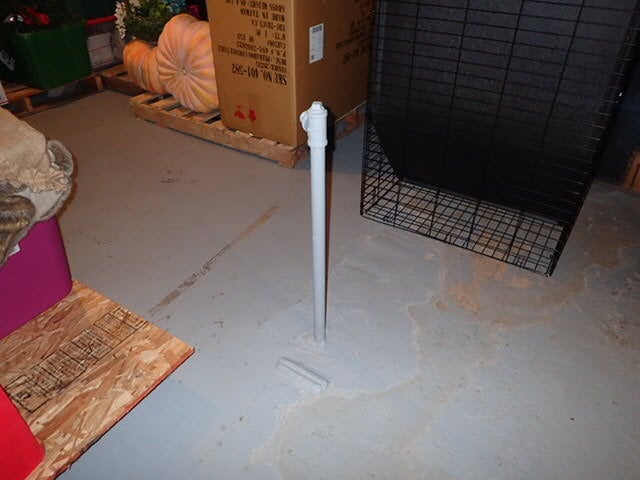
For a home inspector, a standpipe or added sewer backup system should raise a flag: this equipment was installed for a reason, and the buyer should understand that reason before closing. Was it added after a sewage backup, installed to address a known vulnerability or included as a preventive measure?
During a residential home inspection, recognizing the equipment is only the beginning. The next step is to connect it with the home's water history, visible condition and available installation records.
Why flood-control equipment raises a flag during a home inspection
A standpipe or retrofitted backwater valve can be a clue to a drainage concern that is not obvious during a showing. The basement may be dry and freshly finished, while the equipment points to a question that deserves an answer: What happened here, or what risk was someone trying to prevent?
That does not mean the equipment itself is a defect. A properly designed improvement may be a valuable part of protecting the home. But its presence should prompt the inspector and buyer to ask whether there have been backups, whether the cause was identified and whether the work addressed it. Simply seeing a device in place does not establish that the concern has been resolved.
Installation context matters. An overhead sewer included in original construction to meet local requirements is different from a standpipe added to an older basement drain after repeated backups. A sump pump may also be a normal part of the home's original foundation drainage. These situations should not automatically be treated as evidence of previous damage.
For buyers, the flag means investigate the reason and the response. Request seller information, installation and service records, and plumber evaluation when the purpose, condition or effectiveness of the system remains unclear.
Does a home need to be in a floodplain to have a sewer backup?
Basement water can come from several directions. Sewage can back up through connected drains. Groundwater can seep through foundation walls or the floor. Surface runoff can enter a window well, exterior stairwell or below-grade garage.
No. Sewer backups can affect homes outside mapped floodplains. A river does not have to overflow for wastewater to back up through a basement drain. Heavy rainfall can overwhelm local sewers, and a blockage or damaged private sewer line can also interfere with drainage.
Floodplain information is still important when buying a home, but it does not replace a review of the property's sewer connections, basement drainage and water history. The MWRD explains how local sewer capacity and private sewer conditions can contribute to basement backups.
The equipment discussed here addresses different routes of water entry. A sewer backwater valve does not stop groundwater seeping through a foundation wall, and a groundwater sump pump does not automatically protect basement plumbing from sewage backing up through the sewer.
What is a basement floor drain standpipe?
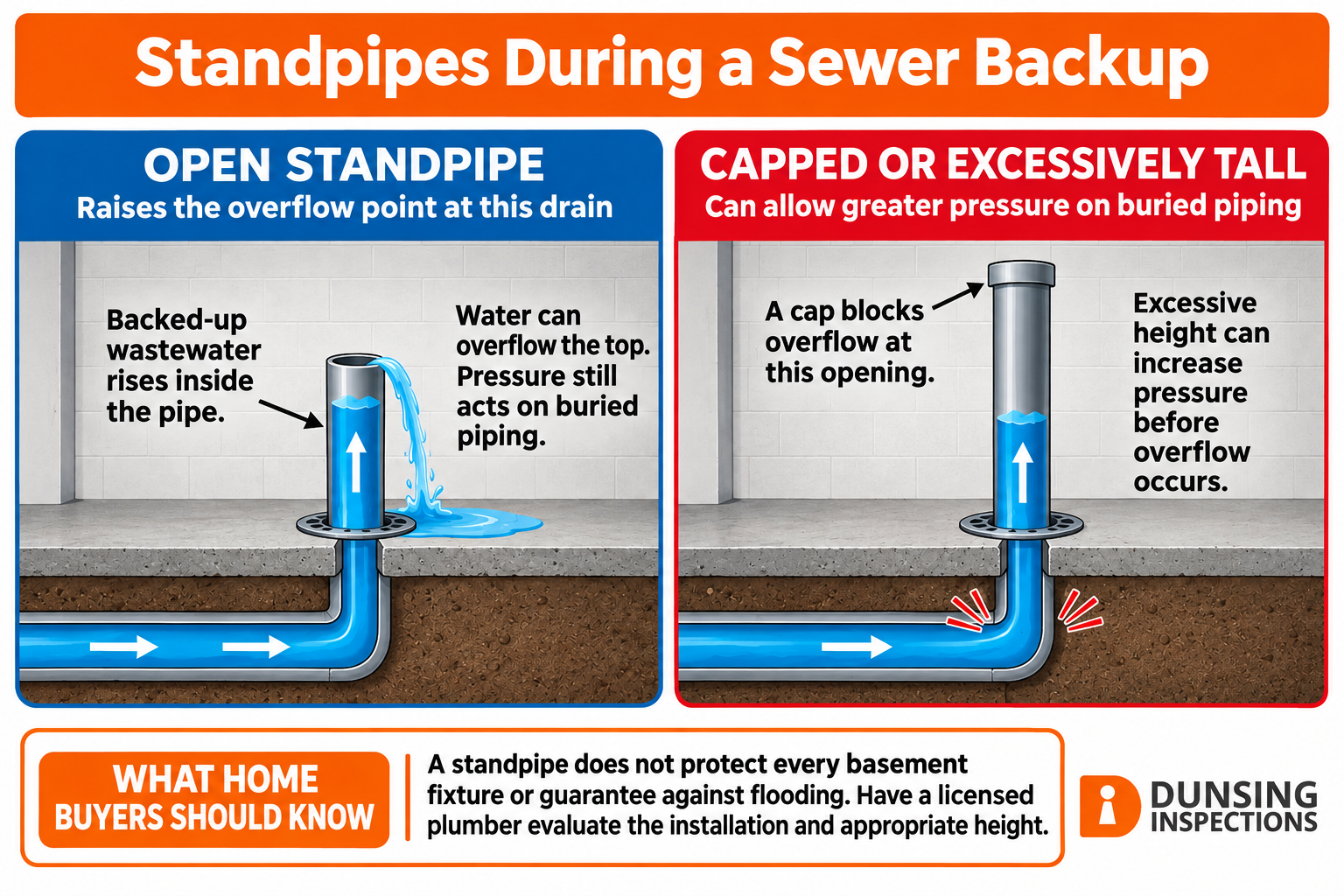
A basement floor drain standpipe is an open vertical pipe fitted into a floor drain. It raises the level at which backed-up water can overflow at that opening. Water may rise inside the pipe before spilling onto the floor.
In this article, “standpipe” refers to that basement drainage device. Fire protection systems and washing machine drains also use the term, but those are different applications.
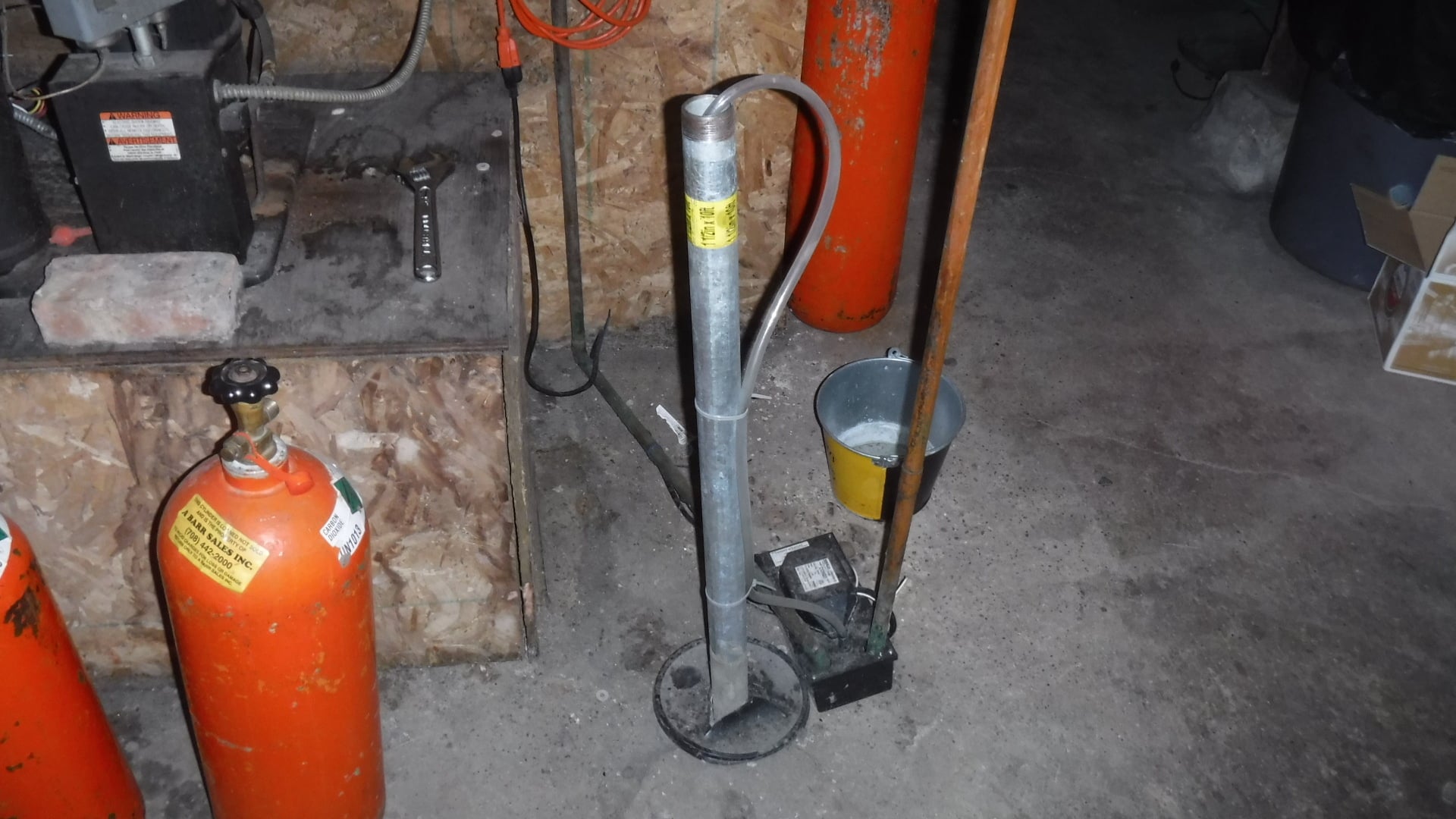
The Illinois guide to floodproofing explains an important limitation: a standpipe does not prevent backup through another low opening, such as a basement toilet or laundry tub. It can also keep water on the basement floor from reaching the drain normally.
Height and pipe condition matter. Making the standpipe taller or capping it can increase pressure on concealed piping. Have a licensed plumber determine whether the arrangement is appropriate for the home rather than modifying it yourself.
For a buyer, a standpipe deserves a direct question: Why was it installed in this floor drain? Ask whether backups occurred before or after installation and what other plumbing or drainage work was performed. Its presence alone does not establish that flooding has occurred.
How a standpipe responds to sewer backup
What does a backwater valve do?
A sewer backwater valve is designed to let wastewater flow out while limiting reverse flow through the pipe it protects. Some close automatically when flow reverses; other arrangements require manual operation.
The Village of Niles' basement flooding guidance notes that debris can prevent a valve from closing completely. Access for maintenance matters. A valve concealed beneath finished flooring or inaccessible landscaping deserves follow-up.
Ask which fixtures the valve serves and what the owner must do when it closes. Wastewater from fixtures upstream of a closed valve may have nowhere to go. Whether toilets, laundry or other fixtures can be used depends on the plumbing arrangement, including any separate pumping system.
Also, a check valve on a pump discharge pipe is not automatically evidence that the home has a sewer backwater valve. The components can look similar while serving different purposes.
What is an overhead sewer system?
An overhead sewer arrangement changes how lower-level fixtures connect to the sewer. Basement wastewater collects in a sewage ejector basin and is pumped to elevated piping, while upper-level fixtures generally drain by gravity.
This can reduce exposure to sewer backup through basement fixtures when properly designed and installed. The pump, discharge piping, check valve and venting are important parts of the arrangement. A pipe near the ceiling, by itself, does not confirm that every basement connection has been addressed.
The MWRD technical guidance on sewer backup protection discusses overhead sewers alongside standpipes and backwater valves. For buyers, installation records and a plumber's explanation can help clarify an unfamiliar system.
Because an ejector pump depends on electricity, ask what happens to the fixtures it serves during a power outage. Do not assume they can continue operating normally.
A sump pump addresses a different water problem
A groundwater sump pump typically collects water from a foundation drainage system and discharges it away from the collection pit. A sewage ejector handles wastewater from the fixtures connected to its basin. They should not be treated as interchangeable equipment.
A home may need both groundwater management and sewer backup protection. Even then, exterior grading, gutters, downspouts, window wells and garage drainage still deserve attention.
For a buyer, useful questions include where the sump discharges, what maintenance has been performed and whether a backup pump or power source is present. If there is orange buildup in the drainage system, our article on iron ochre and home inspections explains another condition worth understanding.
What should a home inspection look for?
A residential inspection should connect visible equipment with the condition of the surrounding home. Depending on access and the agreed scope, observations may include:
- Staining, deterioration or other visible evidence of previous moisture near basement walls, floors and finishes.
- Accessible floor drains, standpipes, valve access covers, sump pits and ejector equipment.
- Visible leakage, damaged components or unclear plumbing arrangements that need specialist review.
- Exterior slopes, downspout discharge and window wells where water may collect near the building.
- Descending driveways, lower-level garage thresholds and accessible drains.
- Finished surfaces, stored belongings or other conditions that limit inspection access.
A home inspection cannot recreate a severe storm, examine every buried pipe or guarantee a dry basement. A clean, dry basement on inspection day does not establish how it performs during heavy rainfall. Inspection findings are most useful when considered alongside seller disclosures, maintenance records and specialist evaluations where needed.
Where does this matter for Chicago and suburban home buyers?
Standpipes, backwater valves and overhead sewers are relevant beyond a single town. Municipal guidance across Chicagoland discusses these systems, but the equipment and risks at an individual property depend on its plumbing, elevation, drainage and improvement history.
Chicago home inspections: understand the sewer connection
When scheduling a home inspection in Chicago, ask about basement plumbing and any sewer backup protection. In a combined sewer system, stormwater and wastewater share piping. Heavy rain can affect the system's ability to carry water away, making the home's connections and accessible protective equipment important questions.
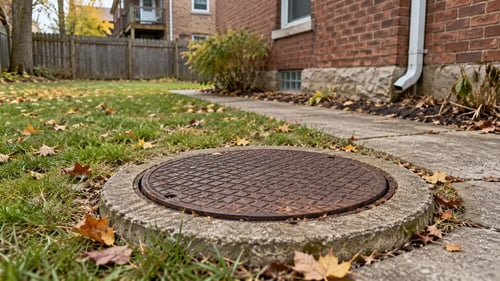
An older home may also have drainage components that have been altered over time. Our guide to Chicago-area catch basins explains why an unfamiliar yard cover deserves identification rather than an assumption about what is underneath.
Niles home inspections: separate sewer backup from surface runoff
A home inspection in Niles should consider how water could reach the lower level. The Village identifies sewer backups, overland flooding and groundwater concerns. A descending driveway or below-grade garage adds a surface-water question that a sewer valve alone cannot answer. Ask about the drain's discharge path and any history of garage water entry.
Skokie home inspections: preventive equipment still needs context
During a Skokie home inspection, the presence of an overhead sewer should prompt a discussion of the system's configuration and maintenance. Skokie's stormwater guidance states that new homes must have overhead sewers. That is a useful reminder that flood-control equipment may be a preventive feature rather than proof of past flooding.
Evanston home inspections: ask about drainage changes
For buyers arranging a home inspection in Evanston, records of sewer work and basement renovations can help explain visible conditions. Evanston's sewer-system information describes its combined sewer history and subsequent drainage improvements. The question for your purchase is how the particular home connects and what changes have been made to its plumbing.
Palatine home inspections: identify what each device protects
A home inspection in Palatine can help buyers understand accessible drainage equipment and identify questions for a plumber. Palatine's basement flooding guidance discusses standpipes and backwater valves as responses to sewer surcharging. Ask which openings are protected and which basement fixtures remain connected to the sewer.
Oak Park home buyers: review older plumbing and later improvements
Oak Park's basement flooding guidance describes older gravity sewer connections and the effects of heavy rainfall. An Oak Park home inspection should consider accessible plumbing alongside records of later flood-control work. Finished basement space makes it especially useful to ask what was installed, when it was serviced and what surfaces are now concealed.
These examples do not establish that every home in a listed community has the same plumbing or flood risk. They show why basement drainage deserves attention across the region during a residential home inspection.
Should you add a sewer scope to your home inspection?
A sewer scope inspection adds a camera view of the accessible interior of the private sewer lateral. That can provide information about roots, obstructions, damaged piping and other visible conditions beyond the reach of a standard visual home inspection.
The MWRD explains that private sewer damage and obstructions can contribute to basement backups. It also explains that backups can occur when local sewers receive water faster than they can carry it away.
Those are different concerns. A camera can help evaluate the accessible pipe, but it cannot establish public sewer capacity or certify the performance of the home's flood-control equipment. Access, standing water and obstructions can also limit the view.
Questions to ask before closing
Before purchasing a home with basement flood-control equipment, ask for answers and available records:
- Has water entered the basement or lower-level garage? Ask where it entered, when it happened and whether sewage was involved.
- Why was the equipment installed? Was it preventive, part of a renovation or a response to a previous event?
- Who installed it? Request available permits, invoices, plans and operating instructions.
- What does it protect? Identify the drains and fixtures served by each valve or pump.
- When was it last serviced? Request maintenance records and information about repairs or replacements.
- What happens during a storm or power outage? Ask about fixture-use restrictions, alarms and backup power where applicable.
- What remains unresolved? Obtain specialist input or repair estimates before your inspection contingency expires when significant questions remain.
Some municipalities offer assistance for eligible drainage improvements. For example, Niles publishes a Flood Control Assistance Program. Contact the relevant municipality about current funding, eligibility and approval requirements before arranging work. Do not assume an existing installation or a purchase automatically qualifies for reimbursement.
Is flood-control equipment a reason to avoid the house?
The equipment alone is not enough to make that decision, but an unexplained installation should not be brushed aside. It may represent a thoughtful improvement, or it may be an incomplete response to a recurring problem. Before closing, understand why it was installed, what it protects and whether the available history and inspection findings support further evaluation.
The same applies to a recently finished basement. Attractive finishes are useful living space, but they may conceal surfaces that would otherwise reveal moisture evidence. Ask about the work and its timing rather than drawing a conclusion from appearances.
Schedule a residential home inspection in Chicago or the suburbs
Dunsing Inspections provides residential home inspections in Chicago and throughout the surrounding suburbs, including the North Shore. We inspect homes with basement drainage and flood-control equipment and explain visible concerns, access limitations and recommended follow-up.
If you are buying a home with a standpipe, backwater valve or overhead sewer, choose a home inspector who understands the differences and knows when to recommend further evaluation. A residential home inspection, with a sewer scope when appropriate, can help you understand more of the property's drainage story before closing.
Schedule your home inspection or contact Dunsing Inspections to discuss the home and the services that fit your purchase.

Comments