




Telephone Tile Foundations: What North Shore Homeowners Should Know
If your home inspector identifies signs of iron ochre, you may be wondering whether the orange buildup is simply a stain or a more significant concern.
The important questions are whether it is affecting the home's drainage system, whether it has caused problems before and what will be needed to keep the system working.
Iron ochre can clog drain tile and related drainage components. Cleaning may restore flow, but deposits can return when the conditions that caused them remain. For buyers and homeowners, understanding that potential for recurrence is an important part of deciding what to do next.
Dunsing has encountered iron ochre in the Skokie area and, most recently, at a home on Chicago's North Side. Here is what we want buyers and homeowners to understand when it comes up during a home inspection.
What Is Iron Ochre?
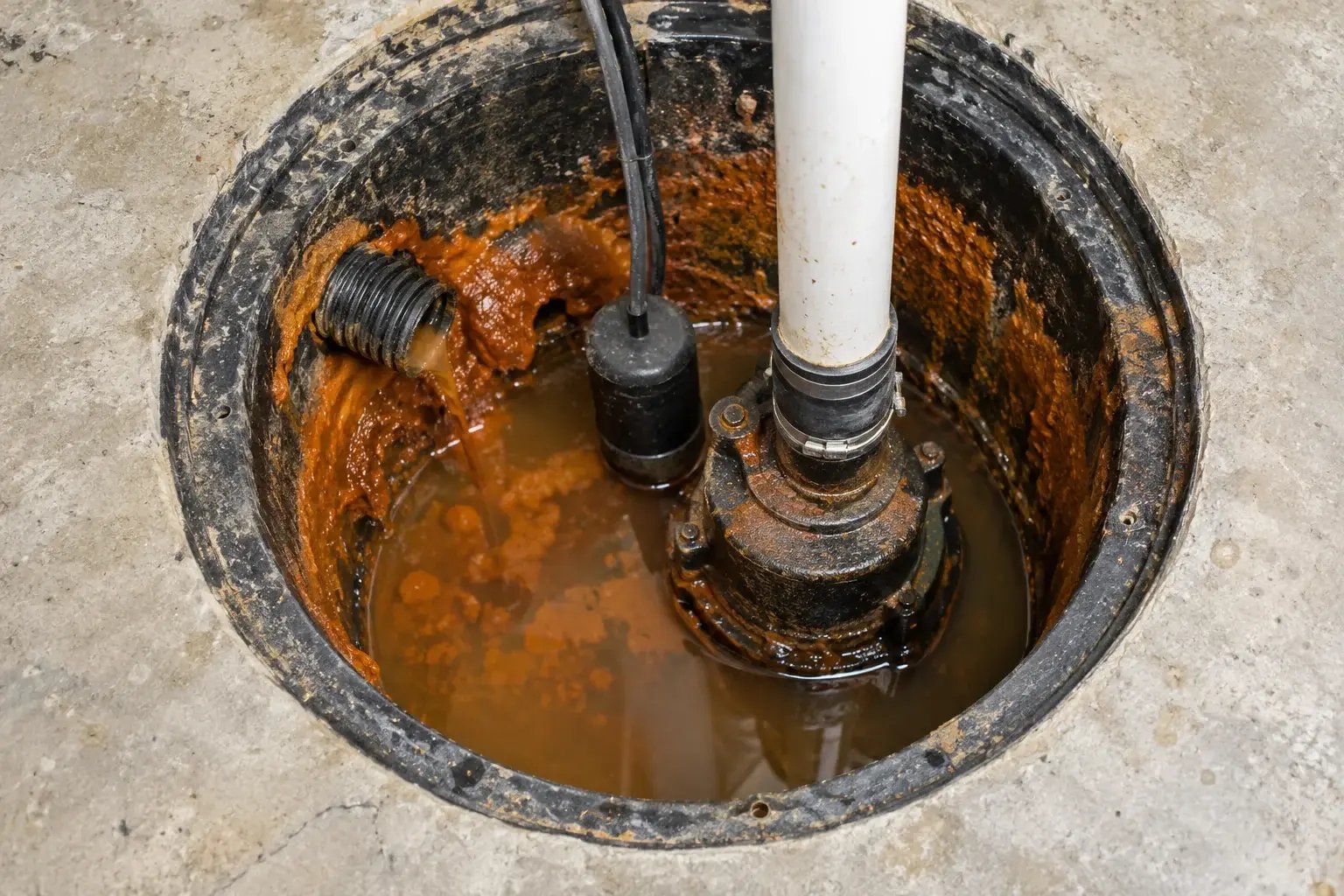
Iron ochre is a rust-colored, often slimy deposit associated with iron in groundwater and the activity of iron-related bacteria. It may appear orange, reddish brown, yellow or tan.
As groundwater carrying dissolved iron reaches oxygenated areas around drainage piping, iron deposits and bacterial slime can accumulate. Michigan State University Extension's Iron Ochre bulletin explains that this buildup can clog drain openings and pipe interiors, reducing drainage performance or causing the system to fail.
In a home, drain tile generally refers to groundwater drainage piping around or beneath the foundation, often connected to a sump pit. It serves a different purpose from the sewer piping that carries wastewater away.
You might notice suspected iron ochre as orange slime or sludge in a sump basin, around drainage connections or on accessible components. However, color alone does not establish the cause or severity of a problem. Rust staining and other deposits can look similar.
Why Is Iron Ochre a Problem?
A foundation drainage system needs to collect groundwater and move it away. When buildup restricts that path, the system may become less effective at managing water around the foundation.
The University of Wisconsin–Madison Extension's drainage maintenance guidance describes iron ochre accumulating at drain openings and around buried drainage piping, obstructing water flow.
For homeowners, the concerns include:
- Restricted drain tile: Deposits can interfere with water entering or moving through the piping.
- Affected sump components: Buildup can accumulate in the sump basin, pump and connected piping.
- Water intrusion: Compromised drainage may contribute to basement or crawlspace water problems.
- Recurring maintenance: Cleaning existing deposits may not prevent additional buildup.
The concern is not simply that the system looks dirty. It is whether the drainage system can continue doing its job.
Where Has Dunsing Seen Iron Ochre?
Iron ochre is not something we encounter routinely throughout Chicagoland. In Dunsing's experience, we have seen it at properties in the Skokie area, with a recent example on Chicago's North Side.
Those observations do not mean every home in Skokie is at risk or that the issue is limited to those locations. They reflect the properties we have encountered, rather than a study of how frequently iron ochre occurs across the region.
During our home inspections in Skokie, visible drainage conditions and the history of basement water concerns deserve attention alongside the home's other major systems. The same applies to home inspections in Chicago, including North Side homes with existing drain tile and sump systems.
Whether you are buying in Skokie, Chicago or the surrounding North Shore communities, a property's actual condition and maintenance history are more useful than its address alone.
Why Can Iron Ochre Return After Cleaning?
Cleaning removes existing deposits. It does not necessarily eliminate the conditions that allowed those deposits to form.
If groundwater continues supplying dissolved iron and conditions remain favorable for buildup, the problem may return. Michigan State University Extension distinguishes between temporary iron sources and ongoing sources that can require continuing management.
At the recent North Side property Dunsing encountered, the drain tile system required cleaning, and the problem returned within approximately five months.
That experience illustrates why "the drains were just cleaned" is not the same as "the problem has been permanently resolved." It does not, by itself, establish that the cleaning was performed incorrectly.
For a buyer, the follow-up questions matter: How quickly did the deposits return? Was drainage affected again? What did the contractor recommend for long-term management?
Can Iron Ochre Be Permanently Remediated?
There is no single solution that can be promised for every property.
The University of Illinois Drainage Guide identifies ochre as a cause of drain blockage and explains that there is no foolproof solution for the problem in subsurface drainage.
Depending on the system, a contractor's recommendations may involve cleaning, improved access for future maintenance, repairs or changes to the drainage design. Wisconsin Extension discusses water-jet cleaning as a management method, with the appropriate approach depending on the piping and surrounding conditions.
Some drainage references address agricultural systems. Their explanations of ochre formation are useful, but treatment methods must be evaluated specifically for a home's foundation drainage.
Before agreeing to "iron ochre remediation," ask what the contractor means:
- Removing the deposits currently present?
- Restoring drainage through affected piping?
- Reducing the rate of future buildup?
- Modifying the system to make maintenance more practical?
- Providing an ongoing inspection and cleaning program?
Those are different outcomes. The word "remediation" should not be taken as a guarantee that iron ochre will never return.
How Much Does Iron Ochre Cleaning or Remediation Cost?
Costs can vary widely because the work required can vary widely. Cleaning an accessible drain line is a different project from opening a basement floor, adding cleanouts or modifying a drainage system.
Iron ochre can make a drainage problem more involved, but its presence alone does not establish a standard price or automatically justify an expensive treatment package.
The main cost considerations include:
IRON OCHRE · COST GUIDE
What drives the cost?
Six factors to review before comparing contractor proposals.
Extent of buildup
Deposits may affect an isolated section or multiple parts of the system.
System size
Longer piping runs and multiple drainage connections can require more work.
Access
Existing cleanouts may simplify service; concealed or inaccessible piping can complicate it.
Condition of components
Damaged piping, pumps or connections may need repairs beyond cleaning.
Proposed treatment
Cleaning, repairs and system modifications are different scopes of work.
Recurrence
Repeated service can increase ownership costs over time.
Compare the scope, not just the price. Ask for an itemized proposal and a maintenance plan for your specific system.
Work involving extensive access, repairs or system modifications can cost substantially more than cleaning alone. However, there is no established flat "iron ochre surcharge."
Obtain itemized proposals from contractors experienced with the condition. Ask what will be cleaned or repaired, how the results will be checked and what future maintenance is anticipated.
A recurring problem could create an ongoing expense, but an annual cleaning schedule should not be assumed. Some properties may need more frequent attention, while others may have a different maintenance requirement.
The most useful budget comes from the property's service history and a contractor's assessment of that specific system.
What Should You Do if Iron Ochre Is Found During Your Home Inspection?
An inspection finding should prompt further investigation before you assume the condition is either harmless or prohibitively expensive.
For buyers, we recommend requesting:
- Previous inspection and service records. When was the condition first identified?
- Cleaning and repair invoices. What work was performed, and what did it include?
- Information about recurrence. How quickly did deposits or drainage problems return?
- A history of water intrusion. Has the basement or crawlspace experienced seepage or flooding?
- A specialist's evaluation. Which components are affected, and what work is recommended?
- A written maintenance plan. What inspections or cleaning will be needed going forward?
- Warranty details. Does coverage address recurring buildup, or only installation and repair workmanship?
If you are purchasing the property, arrange the additional evaluation early enough to review the findings within your transaction's inspection period.
For existing homeowners, maintaining records of cleaning dates, observed buildup and drainage performance can help a contractor assess how the system is behaving over time.
What Can a Home Inspector Tell You?
A home inspection can identify visible warning signs and help put them in the context of the property's drainage conditions and reported history.
However, much of a drain tile system is concealed below the floor or outside the foundation. A standard visual inspection cannot establish the condition of every underground pipe or predict how quickly deposits will return.
A recently cleaned sump or accessible drain may also show fewer visible clues, making the service history especially important.
Dunsing's residential home inspections evaluate visible and accessible conditions and identify concerns that warrant further evaluation. When evidence suggests a recurring drainage problem, specialist assessment and maintenance records can help buyers and homeowners understand what they may be taking on.
If you are buying or maintaining a home in Chicago, Skokie or the surrounding suburbs, tell your inspector about previous water entry, drain tile cleaning or known iron ochre concerns.
The goal is to understand whether the drainage system is functioning, what has happened previously and what will be required to maintain it.

Comments