Email | Office@dunsing.com - Phone | (847) 367-0782
Thermal Imaging & Infrared Inspection Services
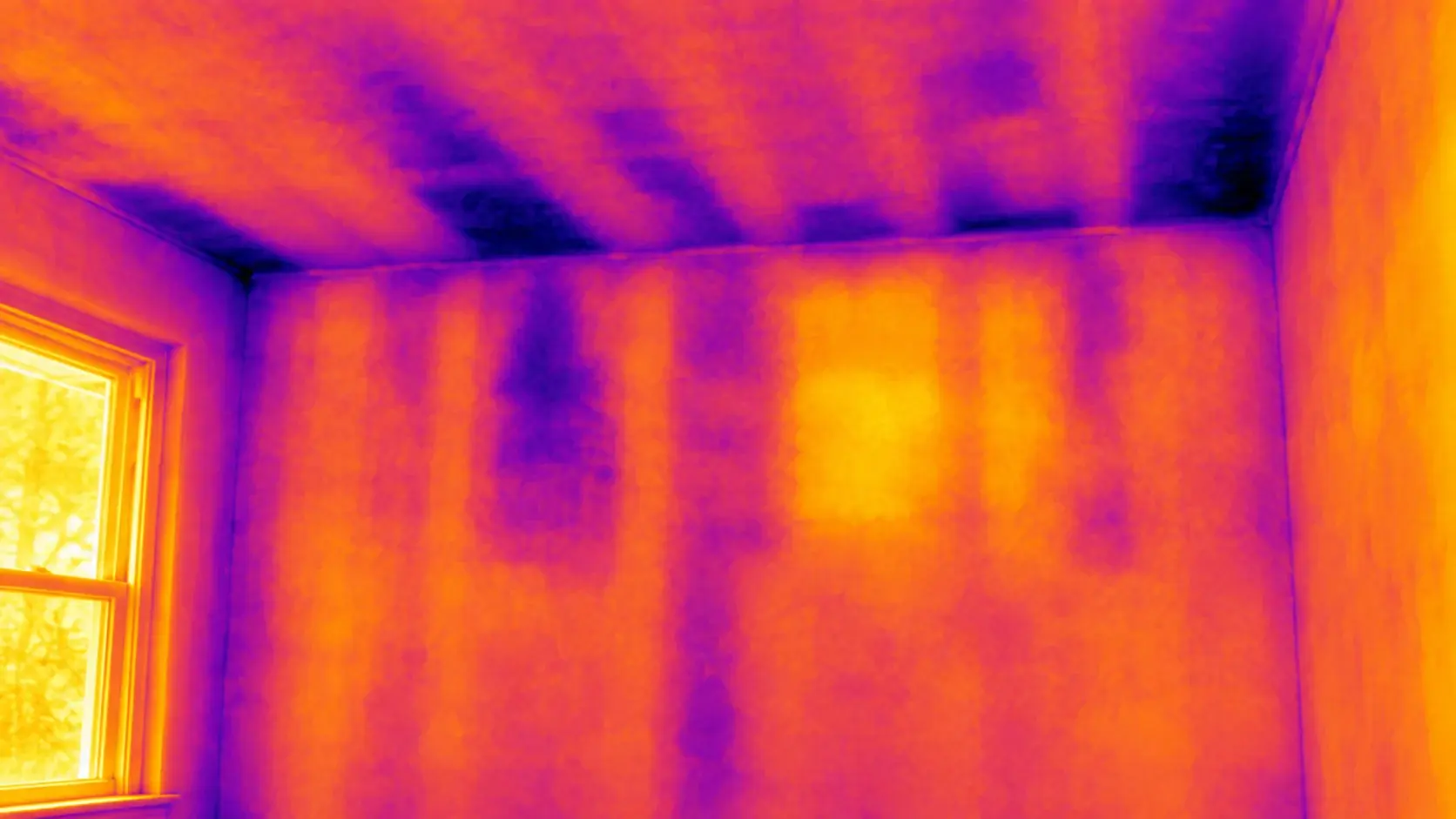
Dunsing provides professional thermal imaging inspections for home buyers, homeowners and commercial property clients throughout Chicago and the surrounding suburbs. Using advanced infrared camera equipment, we scan accessible areas for unusual surface-temperature patterns that may indicate moisture intrusion, missing or inconsistent insulation, air leakage, electrical overheating, HVAC irregularities and other conditions that may warrant closer evaluation.
A thermal imaging inspection uses specialized infrared camera equipment to identify surface-temperature differences throughout accessible areas of a property. These temperature patterns can help direct attention to conditions such as moisture intrusion, missing insulation, air leakage, electrical overheating or other areas that may warrant closer evaluation.
Many building problems begin in places that cannot be fully evaluated by sight alone. Infrared thermal imaging allows us to scan larger areas for unusual surface-temperature patterns that may point to moisture intrusion, missing insulation, air leakage, electrical overheating, HVAC irregularities or other conditions that deserve closer evaluation.
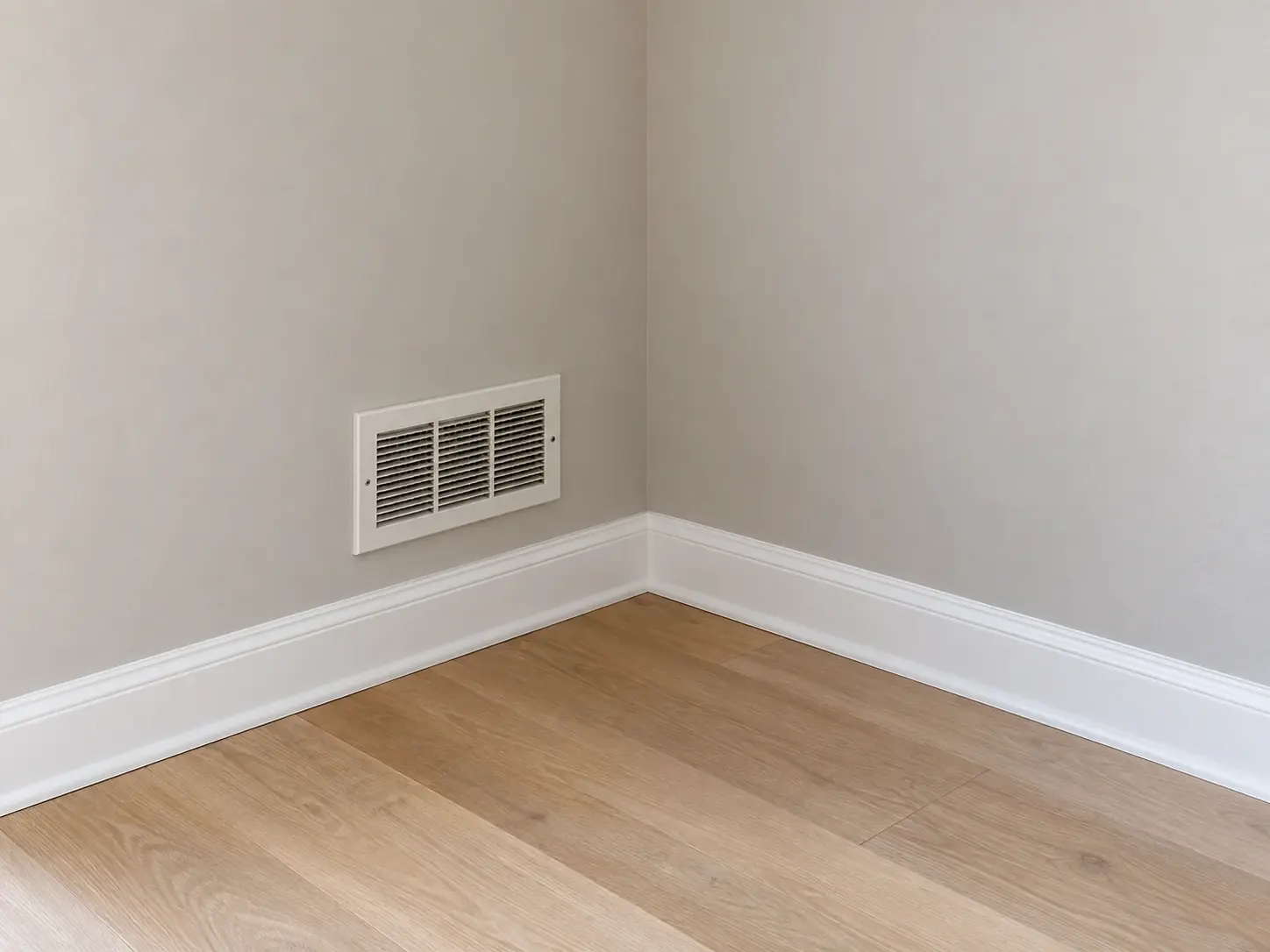
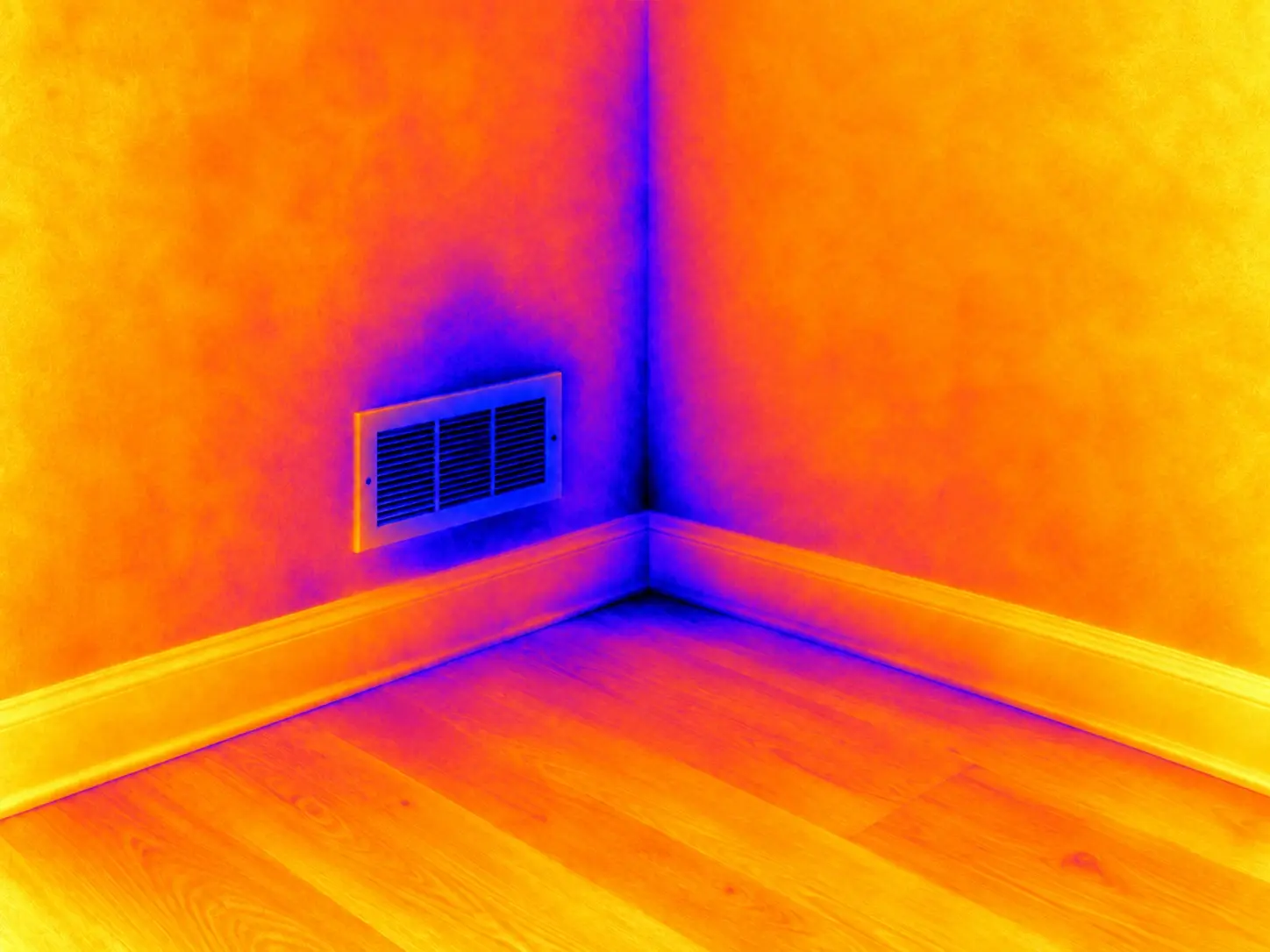
Unlike a standard photograph, a thermal image displays differences in surface temperature. Those patterns can help an inspector identify areas that deserve closer investigation, sometimes before staining, deterioration or other visible evidence becomes obvious.
Thermal imaging does not literally see through walls, and a temperature anomaly does not automatically prove that moisture or another defect is present. When a thermal pattern suggests possible moisture, additional tools such as a moisture meter can be used to investigate further.
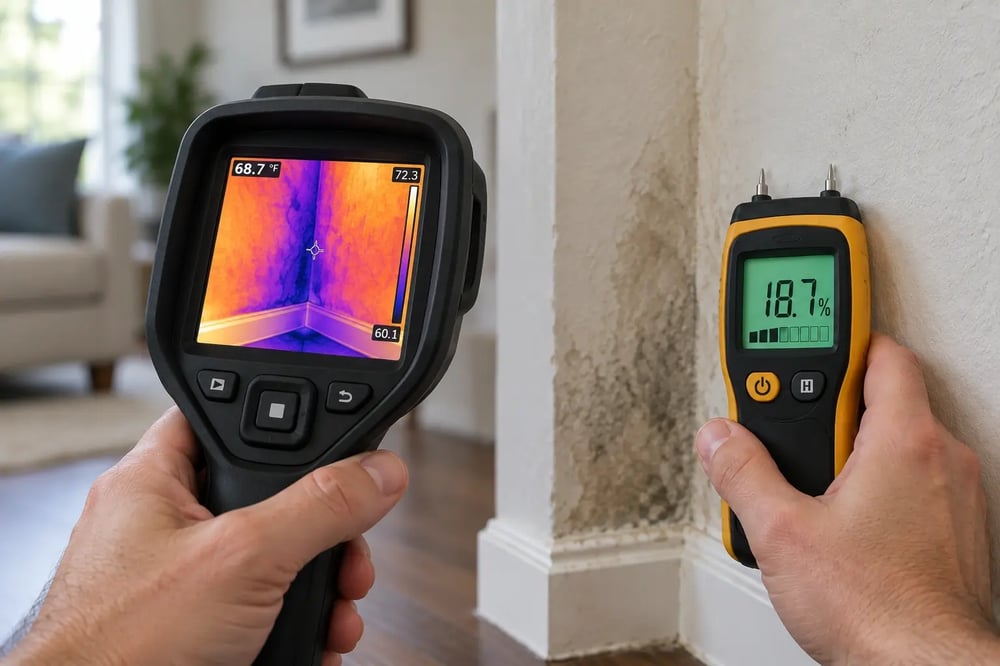
Thermal imaging can help identify temperature anomalies that may point to hidden moisture intrusion, missing insulation, air leakage, electrical overheating, HVAC performance concerns and other conditions that may not be obvious during a standard visual inspection alone. These patterns do not automatically confirm the cause, but they can help identify areas that may need closer evaluation.
Thermal imaging can help identify suspicious temperature patterns across larger areas, while targeted moisture testing can help determine whether elevated moisture is actually present at a specific location. Used together, these tools provide a more complete picture of conditions that may not be obvious during a visual inspection alone.

Thermal imaging allows us to scan larger areas for unusual surface-temperature patterns that may indicate possible moisture intrusion or other hidden conditions. When a suspicious thermal pattern is identified, a moisture meter can often be used to investigate the area more closely and help determine whether elevated moisture is actually present.
The two tools serve different purposes. A thermal camera helps us find areas that deserve attention, while targeted moisture testing provides additional information at the specific location. Used together, they can provide a more complete understanding than either tool alone.
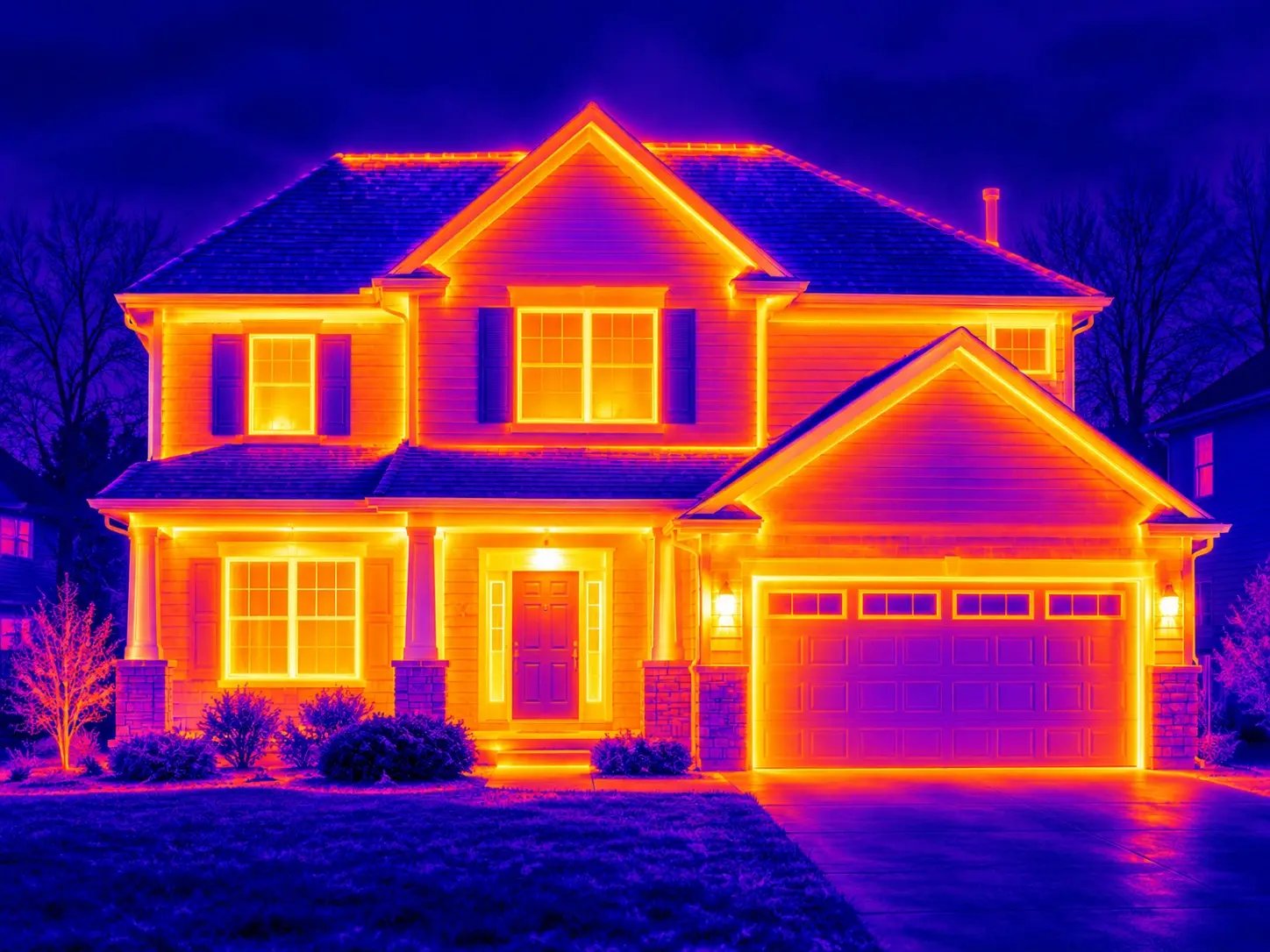
Thermal imaging can help reveal patterns of heat loss, heat gain and air movement across the building envelope that may not be obvious during a visual inspection. Temperature differences around walls, ceilings, windows, doors and other exterior components can help identify areas where insulation or air sealing may deserve closer evaluation.
The U.S. Department of Energy's Consumer Guide to Home Energy Assessments explains that infrared thermographic scans can be used to identify temperature differences along walls, roofs, windows and doors and help locate areas of air leakage.


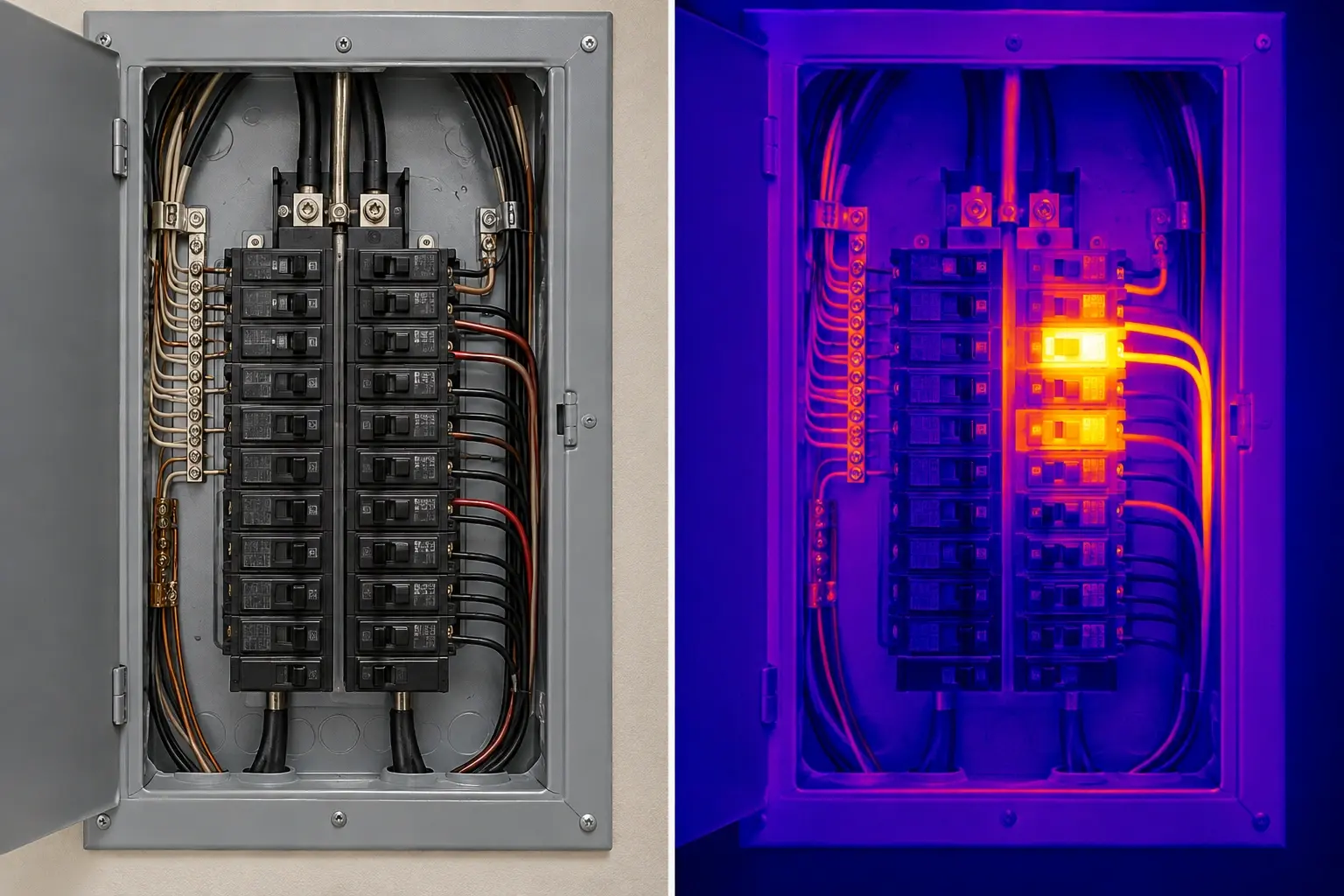
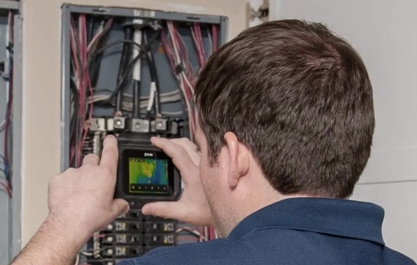
Electrical components can sometimes develop abnormal heat before there are obvious visual signs of a problem. During the inspection, thermal imaging allows us to scan accessible electrical panels, breakers and visible connections for temperature patterns that stand out from surrounding components.
An unusually hot breaker, conductor or connection does not automatically identify the exact cause, but it can indicate a condition that deserves closer attention. Depending on the situation, excessive heat may be associated with loose or high-resistance connections, overloaded circuits, uneven electrical loading, deteriorated components or other electrical concerns. Thermal imaging is used as a screening tool to help identify where further evaluation may be warranted.
Thermal imaging can add valuable information to a property inspection, but the results must be interpreted in context. Environmental conditions affect what the camera can detect, meaningful findings are documented in your inspection report, and certain property conditions make infrared scanning especially useful.
Thermal imaging depends on temperature differences. When interior and exterior temperatures are meaningfully different, insulation deficiencies, air leakage and other thermal patterns are often easier to identify.
Sun exposure, wind, recent weather, HVAC operation, reflective surfaces, building materials and other environmental factors can influence the thermal image. Because of this, the absence of a visible thermal anomaly does not guarantee that no hidden condition exists.
Significant infrared findings are incorporated into the written inspection report so you can see where unusual temperature patterns were observed and understand why they may deserve additional attention.
Thermal imaging is a valuable inspection tool, but it has limits. Infrared cameras detect surface-temperature differences, not the hidden condition itself, so thermal findings must be interpreted alongside visual observations, environmental conditions and other testing when appropriate.
For decades, Dunsing has provided residential and commercial inspections throughout Chicagoland. Our experienced inspectors combine local knowledge, ongoing training and detailed reporting to help buyers, sellers and homeowners better understand the properties they depend on.
A thermal imaging inspection uses an infrared camera to measure and display surface-temperature differences across walls, ceilings, floors, electrical components, HVAC systems and other accessible areas of a property.
These temperature patterns can help identify areas that may warrant closer evaluation for moisture intrusion, missing insulation, air leakage, electrical overheating, HVAC irregularities or other hidden conditions that may not be obvious during a standard visual inspection.
No. A thermal camera does not see through walls, ceilings or floors.
Infrared cameras detect differences in surface temperature. Those patterns can sometimes suggest that something unusual is occurring behind or within a building component, but the camera does not provide a direct view of what is concealed inside the structure.
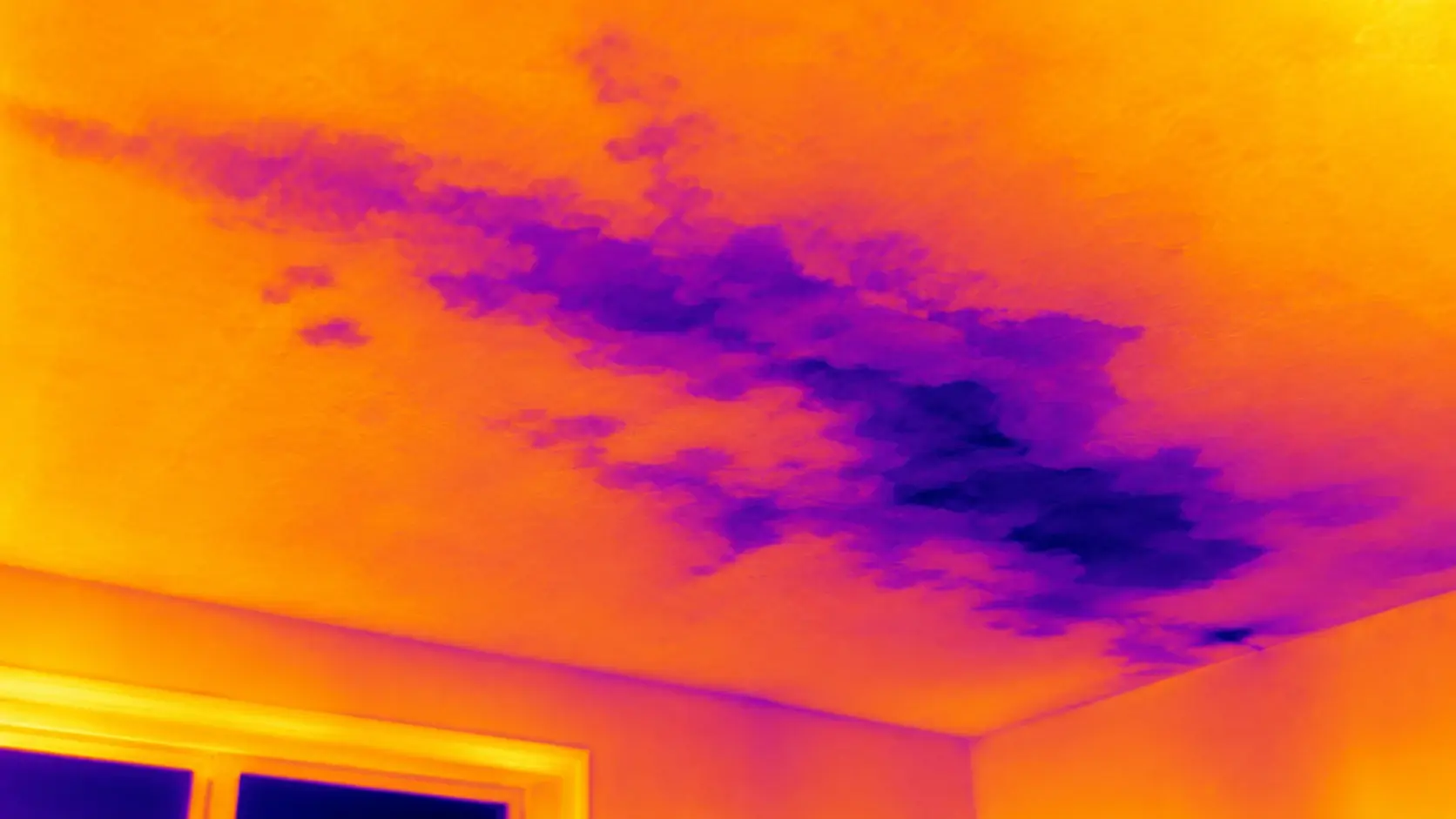
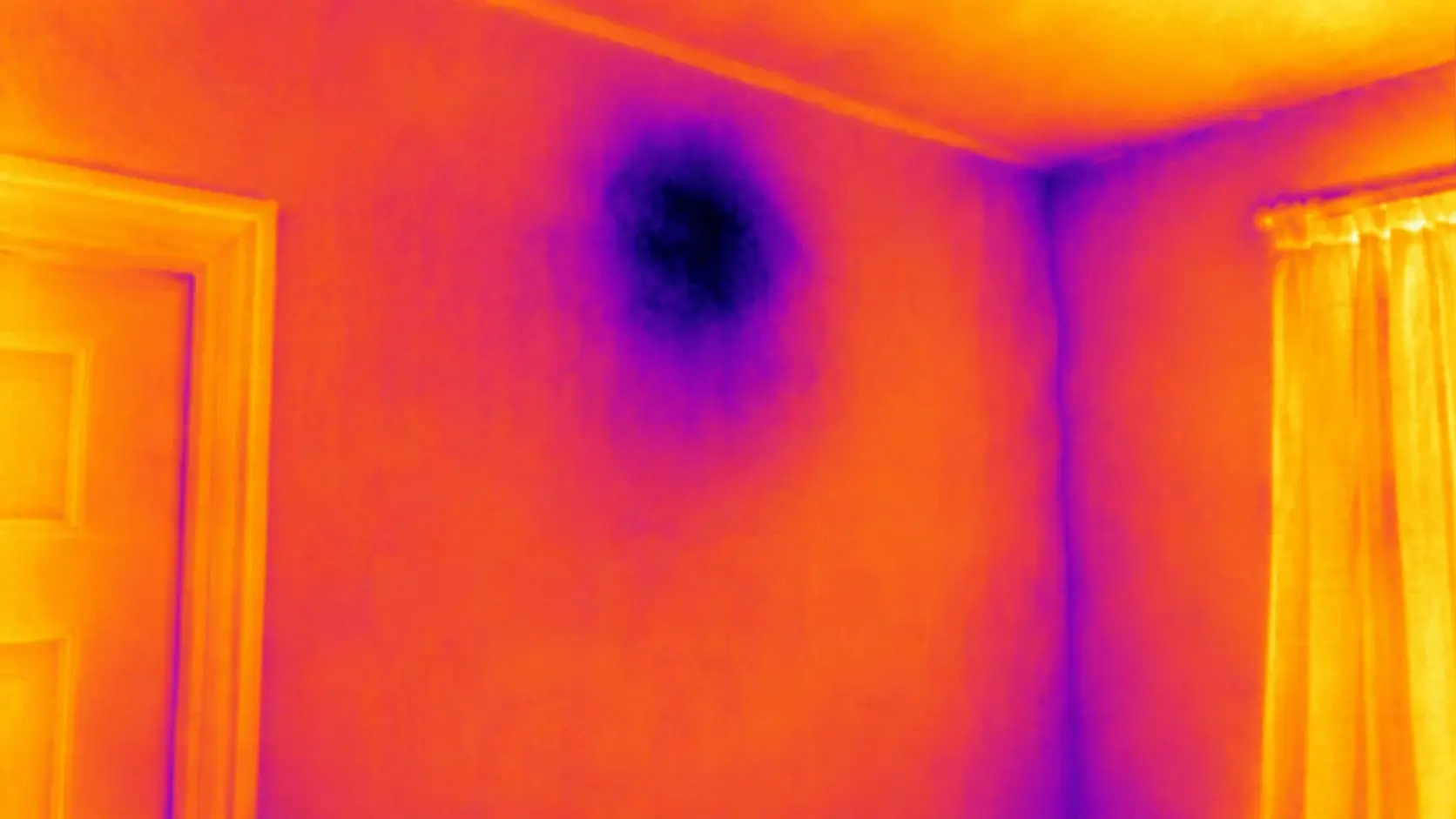
Thermal imaging can help identify temperature patterns that may be associated with moisture intrusion, but a thermal image alone does not prove that water is present.
Moist areas can sometimes appear warmer or cooler than surrounding materials because of evaporation, temperature differences or changes in the material. When a suspicious thermal pattern is identified, Dunsing may use a moisture meter to investigate the area further.
Infrared thermal imaging can help reveal visible temperature anomalies associated with conditions such as:
A thermal anomaly identifies an area that deserves attention. Additional evaluation may still be needed to determine the exact cause.
Yes. Missing insulation, insulation voids and air leakage can create surface-temperature differences that may become visible with an infrared camera when conditions are appropriate.
Thermal imaging can be particularly useful around exterior walls, attic areas, ceilings, windows, doors and other portions of the building envelope. The U.S. Department of Energy recognizes infrared thermography as a useful tool for identifying insulation deficiencies and air leakage during building-energy evaluations.
Thermal imaging can help identify abnormal heat patterns at accessible electrical panels, breakers, conductors and connections.
An unusually hot component may indicate a condition such as excessive electrical loading, a high-resistance connection, deterioration or another electrical concern. Thermal imaging does not diagnose the exact electrical defect, so significant anomalies may warrant additional evaluation by a qualified electrician.
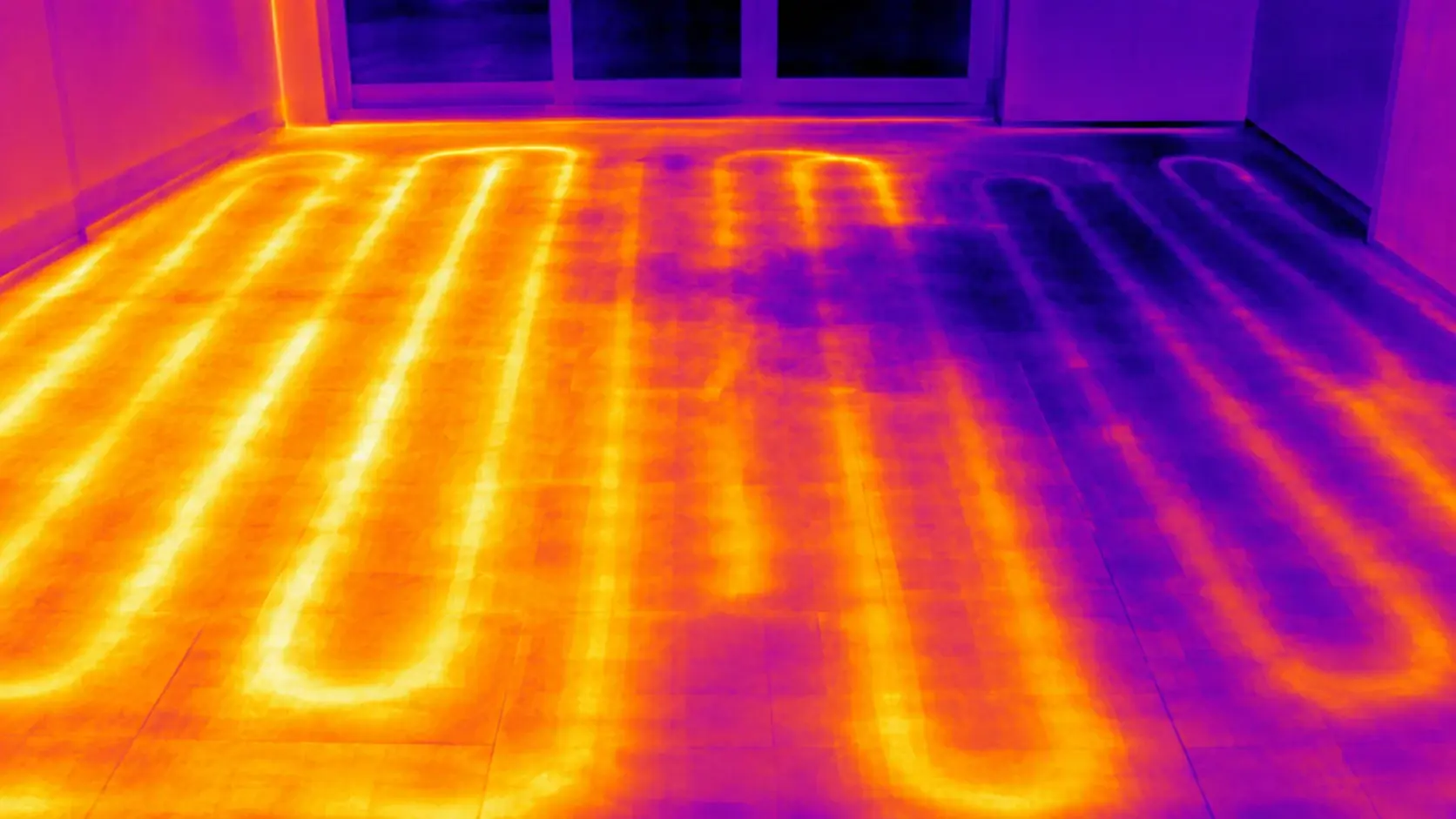
Thermal imaging can be particularly useful for visualizing heat distribution from radiant floor systems and other hot-water heating components.
It may also help trace active hot-water piping and reveal unusual temperature patterns that suggest flow, distribution or water-heating concerns. The thermal image provides information about where heat is traveling, but additional evaluation may be needed to determine why a system is not performing as expected.
Thermal cameras accurately measure surface-temperature differences when they are used and interpreted correctly, but the meaning of a thermal pattern depends on the surrounding conditions.
Indoor and outdoor temperature differences, sunlight, wind, recent weather, HVAC operation, reflective materials and other factors can affect what appears in the image. That is why Dunsing interprets thermal findings alongside visual observations and other inspection information rather than treating every hot or cold area as a defect.
Thermal imaging can be particularly valuable when:
It can also be useful when there are no obvious visual signs of a problem but other conditions suggest that closer investigation may be worthwhile.
Yes. Meaningful thermal findings identified during the inspection are documented in the written inspection report.
Depending on the condition, the report may include thermal images, observations, moisture readings when used, explanations of what the temperature pattern may indicate and recommendations for additional evaluation when appropriate.
Yes. Thermal imaging can be especially useful in commercial property inspections because larger buildings often contain extensive roof areas, electrical equipment, HVAC systems, building-envelope components and other systems that can benefit from infrared evaluation.
Thermal imaging allows an inspector to scan larger accessible areas efficiently for unusual temperature patterns that may warrant closer investigation.
Dunsing thermal imaging inspections typically start at about $200, with final pricing based primarily on the size of the property and the overall inspection scope.
Larger homes, multi-unit buildings and commercial properties may require additional scanning time and therefore may cost more. Thermal imaging can also be added to a standard inspection when appropriate.
In addition to standard property inspections, we offer a range of specialized services to uncover potential issues, evaluate key systems, and provide greater peace of mind.
Get to know the experienced professionals behind every Dunsing inspection. Our licensed inspectors bring diverse backgrounds, extensive technical knowledge, and a shared commitment to providing thorough, dependable property inspections. Each member of our team is trained to clearly communicate their findings, answer your questions, and help you better understand your property. Meet our inspectors and discover the expertise, professionalism, and personal service that have helped build Dunsing’s trusted reputation.
Stay informed with practical tips, expert guidance, and helpful insights designed to protect your home and make homeownership easier. Explore our latest articles covering home inspections, maintenance, common concerns, and what homeowners and buyers should know.
An inspection report can feel overwhelming. Learn how to prioritize findings, compare repair proposals, verify contractor credentials, and choose the right next steps before committing to work on
Read MoreYour insurer may request a property inspection even after you have purchased a home. Learn what insurance inspections can cover, why they are requested, and how to prepare for the process.
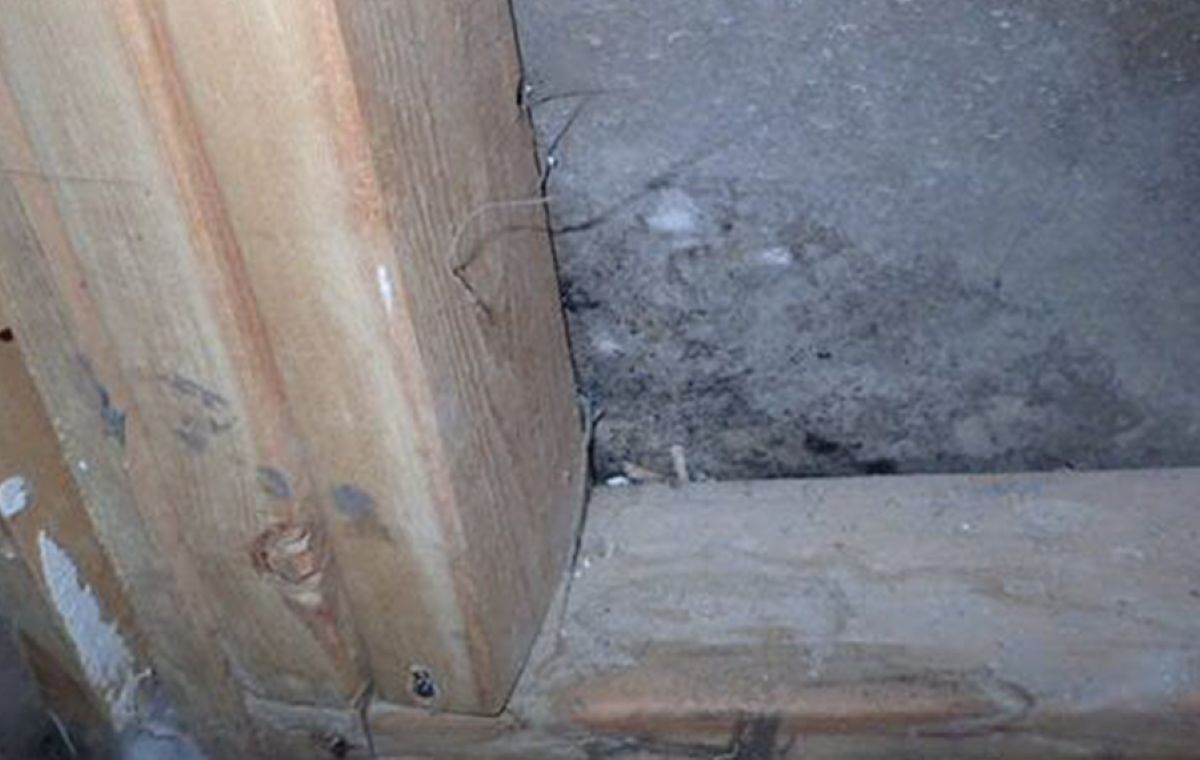
Read MoreMold concerns often start with moisture or visible warning signs. Explore how a home inspection, specialized mold evaluation, and third-party testing can help you understand what needs further
Read MoreChanges following the 2024 NAR settlement raised new questions for buyers and real estate professionals. Jamie shares his perspective on buyer representation, compensation, and the potential impact
Read MoreThe final walkthrough deserves as much attention as the earlier steps in your purchase. Use our pre-closing checklist to review repairs, test systems, and spot changes before taking ownership.

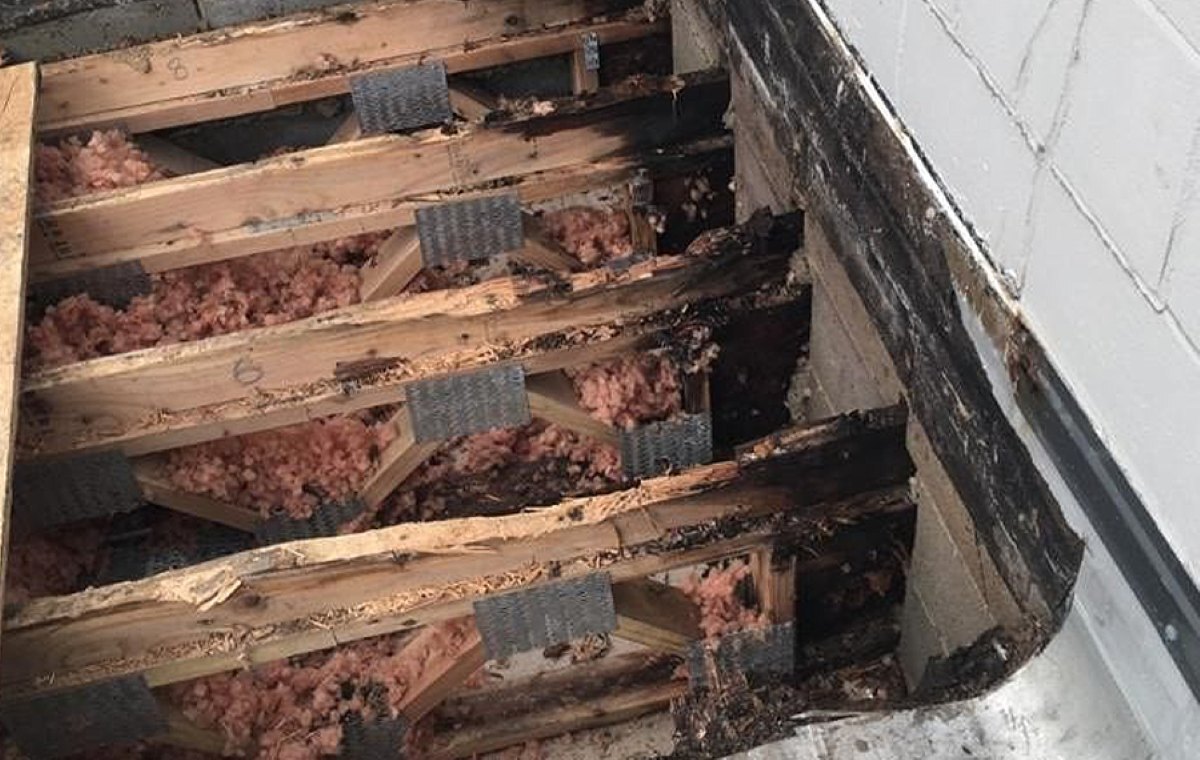
Read MoreSplit-faced block can allow water into a building when construction details and maintenance fall short. Learn what to look for and why moisture concerns may call for a specialized evaluation.
Read MoreMeet Our Expert Inspectors

Get to know the experienced professionals behind every Dunsing inspection. Our licensed inspectors bring diverse backgrounds, extensive technical knowledge, and a shared commitment to providing thorough, dependable property inspections. Each member of our team is trained to clearly communicate their findings, answer your questions, and help you better understand your property. Meet our inspectors and discover the expertise, professionalism, and personal service that have helped build Dunsing’s trusted reputation.

In Business Since 1980
Experienced Licensed Inspectors
Skilled in Residential & Commercial
Detailed & Understandable Reports
Contact Us
28835 N. Herky Dr., #104, Lake Bluff, IL 60044
office@dunsing.com
(847) 367-0782